

China’s Brush Industrial Clusters Upgrade to Enhance Global Competitiveness
China’s Brush Industrial Clusters: Upgrading for Global Competitiveness
China has long been the world’s leading producer of brushes, from cosmetic tools to industrial applicators, with industrial clusters in regions like Cangzhou (Hebei Province) and Shenzhen (Guangdong Province) driving over 60% of global output. However, as global markets demand higher quality, sustainability, and innovation, these clusters are undergoing a strategic upgrade to move beyond low-cost manufacturing and secure long-term global competitiveness.
The shift is driven by three key factors. First, evolving consumer preferences: Western markets now prioritize eco-friendly materials, ergonomic designs, and cruelty-free production—areas where traditional Chinese brush manufacturers historically lagged. Second, intensifying competition: Emerging economies like Vietnam and India are challenging China’s cost advantage, forcing domestic producers to differentiate through value, not just price. Third, policy support: China’s “Made in China 2025” initiative and local government incentives for R&D and green manufacturing are accelerating technological adoption.
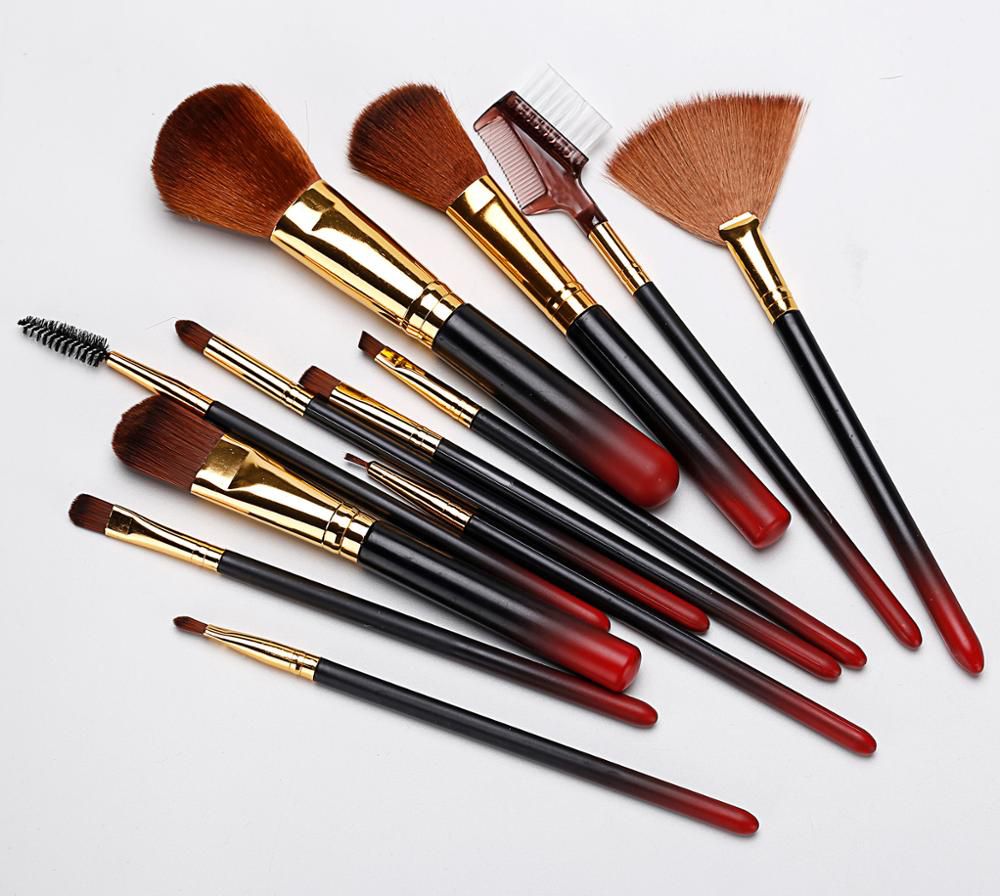
At the heart of this upgrade is technological innovation. Take brush filaments, a critical component: leading manufacturers are replacing conventional nylon with biodegradable alternatives, such as cornstarch-based fibers and bamboo charcoal-infused filaments. These materials meet EU REACH standards and appeal to sustainability-focused brands like Lush and Glossier. In Cangzhou, a major cluster, one enterprise invested $5 million in German extrusion equipment, reducing filament defect rates from 8% to 2% and increasing tensile strength by 30%—key metrics for high-end cosmetic brush buyers.
Automation is another game-changer. Traditional brush assembly, once reliant on manual labor, now uses AI-powered quality control systems and robotic arms for precision tasks like bristle trimming and handle attachment. A Shenzhen-based factory reports that automation has cut production time by 40% and labor costs by 25%, while improving consistency—vital for maintaining partnerships with luxury beauty brands like Estée Lauder.
Design and branding are also taking center stage. Clusters are collaborating with international design firms to create brushes with ergonomic handles and aesthetic appeal, moving from OEM (Original Equipment Manufacturing) to OBM (Original Brand Manufacturing). For example, a Cangzhou brand launched a “Sustainable Beauty” line with recyclable aluminum handles and plant-based filaments, now stocked in Sephora stores across Europe. This shift from “anonymous supplier” to “recognized brand” has lifted profit margins by 15–20%.
Supply chain optimization further strengthens competitiveness. Clusters are integrating upstream (filament production) and downstream (packaging, logistics) processes, reducing lead times from 45 days to 20 days for bulk orders. Partnerships with global logistics firms like DHL ensure faster delivery to key markets in the U.S. and Europe, critical for meeting seasonal demand spikes in the beauty industry.
The results are tangible. In 2023, China’s high-end cosmetic brush exports grew by 22%, outpacing the overall brush export growth of 8%. European market share for Chinese biodegradable filaments rose from 12% to 28% in two years. More importantly, these upgrades are positioning China as a leader in sustainable brush manufacturing, not just a low-cost producer.
As global markets become more discerning, China’s brush industrial clusters are proving that upgrading—through innovation, sustainability, and brand building—is not just a choice but a necessity. By combining technological prowess with an understanding of global trends, these clusters are set to redefine “Made in China” as a mark of quality, not just quantity, in the global brush industry.


